The screens and the user journey
What the user sees and does, from opening the app to the action that matters to you, designed before it is built.
Kōten Studio builds mobile apps for iPhone and Android from a single codebase, then publishes them on the App Store and Google Play, for small businesses, startups and founders in Belgium. The price and the date are fixed after a short brief, before the first line of code.
What the user sees and does, from opening the app to the action that matters to you, designed before it is built.
One codebase in React Native (with Expo) or Flutter, which produces a real app on each platform, not a website in disguise.
User accounts, database, file storage and access rules, when the app needs them.
The features that often decide whether an app gets used or not: push notifications, payments, subscriptions, maps, messaging.
Store listings, screenshots, submission and answers to Apple's and Google's review checks, all on developer accounts in your name.
The code, the accounts and the rights are yours. The app is built with widely used tools, so another developer can take it over later.
Building one app for iPhone and a separate one for Android means paying twice for the same work and maintaining two sets of code. With React Native or Flutter, a single codebase produces both apps, and they look and run as smoothly as native apps.
The choice between the two depends on the project: React Native when the app has a lot in common with a website, Flutter when the interface must look identical, pixel for pixel, on both platforms.
Kōten Studio also builds its own products. Konek, an app to organise sport and social outings with your friends, is live. Apportia, for business introductions between the people who make them and the companies that receive them, is available on the App Store and Google Play. Fideloop, which puts loyalty cards in Apple Wallet and Google Wallet, has launched in the Benelux.
That keeps us up to date on what really matters after launch: changes to the App Store and Google Play, new versions of iOS and Android, and user feedback.
An app's life does not stop at release: Apple and Google bring out new versions of their operating systems every year, and your users will ask for improvements. We offer ongoing support to keep the app compatible and develop it further, at the pace you choose.
You describe the app. The project brief asks for the main screens, what the user needs to be able to do and the platforms you want. It takes about ten minutes.
You get a price and a date. After a conversation to clarify the scope, you get a written proposal, with a fixed price and a publication date.
You test it on your phone. As the work progresses, you install test versions on your own phone and watch the app take shape.
Publication on the App Store and Google Play. We prepare the listings, submit the app and handle the back-and-forth with Apple and Google until it is published.
Our own mobile and web products, all live: Konek, Apportia and Fideloop.
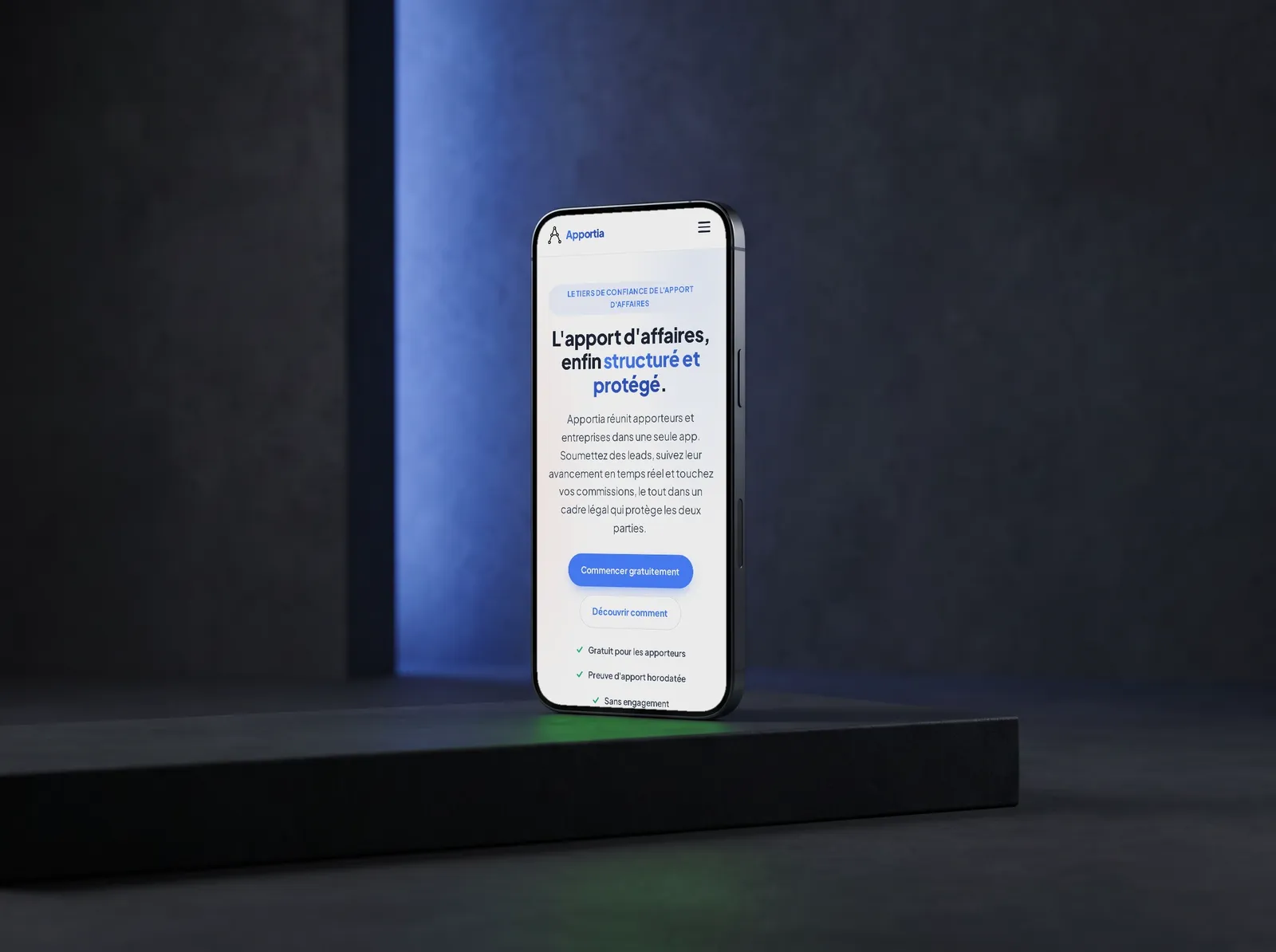
The person who brings a lead and the company that receives it work from one record, commission included.
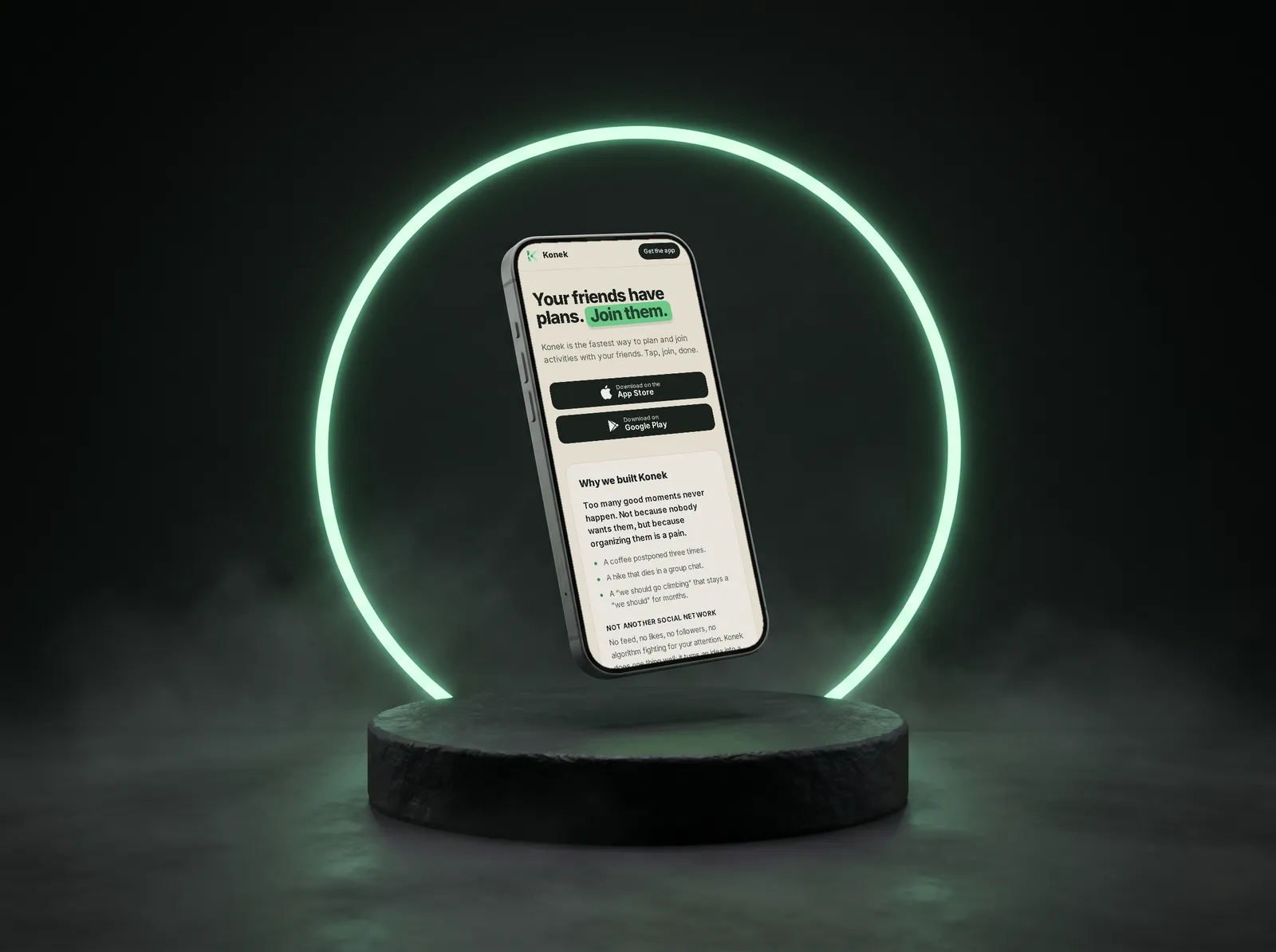
An app to organise sport and social outings with your friends. You create an outing (a game of padel, a five-a-side, a drink), you invite your mates, everyone says whether they are coming, and everyone knows where and when to meet.
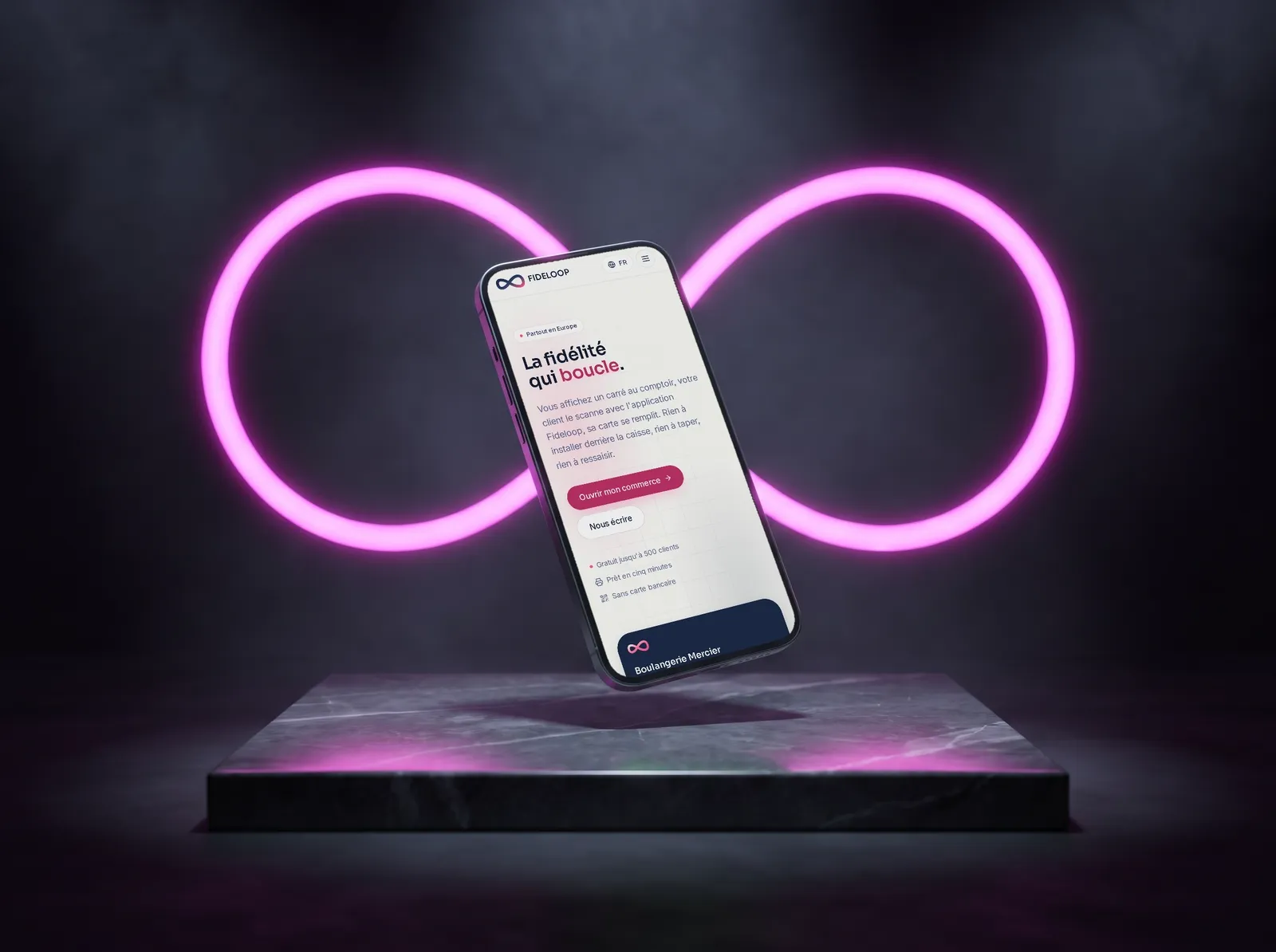
Loyalty cards that sit in the phone wallet your customers already carry. Nothing to download.
The cost of a mobile app depends mainly on how many screens it has and whether it needs user accounts, payments and a server. At Kōten Studio, the price is fixed in writing after a short brief, before any development starts, and a single codebase covers both iPhone and Android.
The time needed to develop an app depends on the app, and the publication date is fixed in the proposal. You get a first version to install on your phone early on, then the app grows in short cycles until it is ready to publish. You also need to allow time for Apple and Google to review the app before it goes live.
For most projects, a cross-platform app built with React Native or Flutter is enough: it gives the same result as a native app, and it is only built once. Fully native development only makes sense for very specific needs, and we will flag them at the brief stage if they apply.
Kōten Studio publishes the app on the App Store and Google Play: listings, screenshots, submission and answers to Apple's and Google's review checks. The app is published on Apple and Google developer accounts in your name, so that it belongs to you.
Your app needs a server as soon as it has user accounts, shared data, payments or notifications. We set up the server and the database along with the app, and we cover them from the brief onwards so the quote includes them.
An app makes sense if your users come back often, need notifications or want quick access from their home screen. To be found and to present your business, a website is enough. We will tell you honestly when we go through your brief.
Describe the main screens and what the user needs to be able to do. You get a fixed price and a date before you commit.